
Caribbean hurricane season travel in 2027: what it means for weddings, honeymoons, and groups

The hurricane-season trips that go badly are rarely the ones a storm actually hits. They're the ones where a storm three islands away closes an airport for a day, a connection misconnects, and a wedding group of 40 finds out that the resort's weather policy, the airline's waiver, and each guest's insurance all cover different things. Caribbean hurricane season travel isn't mainly a weather problem. It's a contracts problem, and most of it can be solved before anyone books a flight.
That matters for 2027, because the months that carry the most weather risk are also the months many resorts treat as their low-rate season. For a lot of couples and groups, that trade is worth making. It just has to be made with eyes open.
This piece assumes you're leaning Caribbean and want to know how to plan around the weather.
What Caribbean hurricane season actually changes for travel
The Atlantic season officially runs from June 1 to November 30, according to NOAA's National Hurricane Center, which puts the peak at September 10, with most activity occurring between mid-August and mid-October.
Hurricane season isn't one risk. It's three, and they hit different trips differently.
The first is a direct hit, which is the one people picture and the least common. The second is disruption from a storm nearby: flights canceled, a day or two of rain and wind, a closed beach, a boat day called off. The third is the knock-on effect in the weeks after a storm, when a resort may be repairing or an island's airport and roads are slower to recover.
For a honeymoon couple, the second risk is an annoyance. For a wedding with 40 guests flying from a dozen cities, it can mean half the group arrives a day late. That's why the same season can be a smart choice for one trip and a poor one for another.
The ABC islands, honestly
Aruba, Bonaire, and Curaçao come up in every hurricane-season conversation, and for good reason. They sit off the coast of Venezuela, far south of where most Atlantic storms track.
Here's the honest version of what that means. Aruba's tourism board describes the island as well south of the main Atlantic hurricane belt. The Meteorological Department of Curaçao, which forecasts for the Dutch Caribbean, is more careful. Its climatology describes the ABC islands as on the southern fringes of the belt rather than outside it, noting that considerable damage from tropical cyclones has historically come roughly once every 100 years, and that a tropical cyclone passes within about 150 kilometers around once every four years, mostly to the north. Bonaire's own visitor site counts four direct hurricane hits since 1871 and puts it simply: the risk is low, but not zero.
So the ABC islands are a lower-risk choice, not a no-risk one. Passing storms can still bring rain, flat calm, or rough seas, and they can still affect flights that connect through hubs further north. What they do offer is a much lower chance that the trip itself is upended.

How the three differ
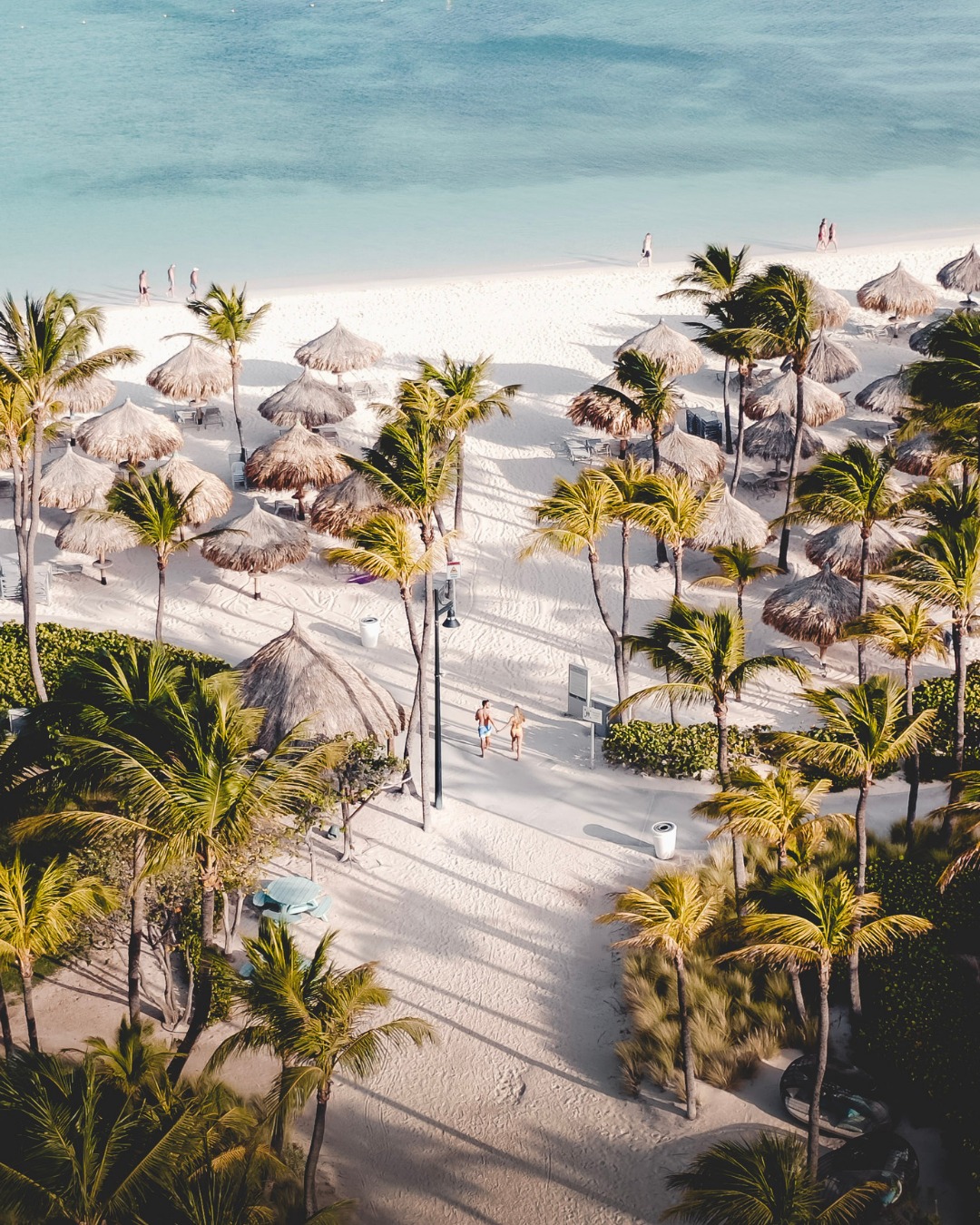
Aruba is the most built-up of the three, with the deepest range of resorts, the most nonstop flights from the U.S., and long white-sand beaches on the calm west coast. It's the easiest fit for a wedding group that needs a large room block and simple logistics. The drawback is that it can feel busy, and the most popular beaches don't have much seclusion.
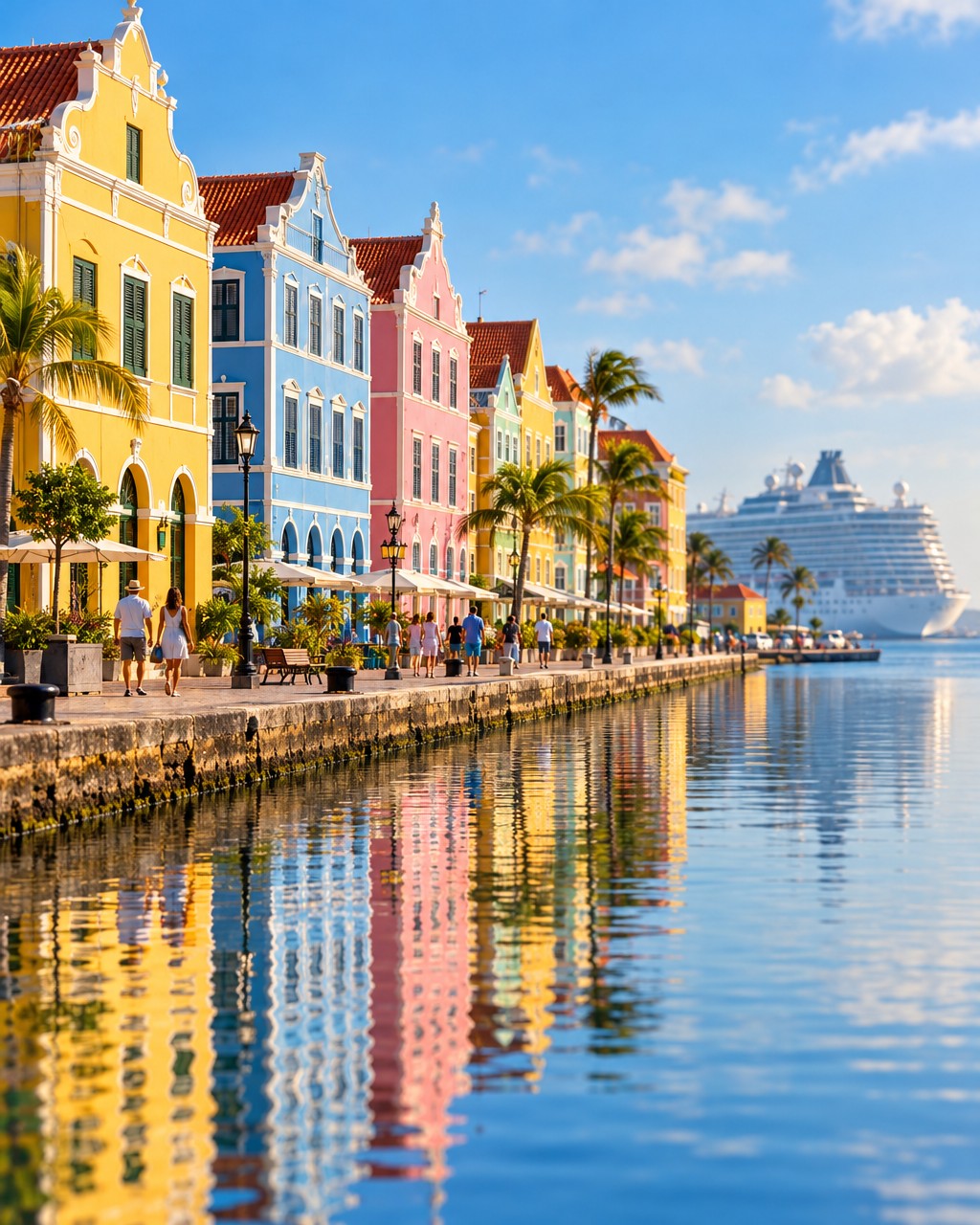
Curaçao has more texture. Willemstad's colorful harbor and old town give it real character, and the coast is dotted with small coves rather than one long beach. It suits a honeymoon or a smaller group that wants something to explore. The drawback is that the beaches are smaller and more scattered, so a group may need cars or transfers to get around.
Bonaire is the quiet one, built around diving and snorkeling, with a protected marine park along much of its coast. It's a good fit for couples or groups who want water and calm over nightlife. The drawback is limited big-resort inventory and fewer flights, which makes it harder for a large wedding. Visitors 13 and over also pay a $75 tourist tax, which is worth putting in guest communications.
Resort hurricane policy vs travel insurance
This is where most of the confusion lives. A resort's hurricane or weather policy and a travel insurance policy are two different things, and they protect against different problems.
What a resort's policy usually is
A resort weather policy is a promise from the hotel. Typically it covers some combination of rebooking or credit if a hurricane affects the resort during your stay or prevents you from getting there, and sometimes changes to your dates without penalty. Terms vary widely. Some are automatic, some apply only to bookings made directly, some require a named storm or an official warning, and some cover only the hotel portion of the trip, not your flights.
Sandals is one brand with a current, published version on its own site. Its Vacation Promise page says a weather protection plan is included at no extra charge for travel between August and October 2026 and calls it a limited plan, with full terms on a separate Trip Mate page. Separately, the same page says bookings can be modified or canceled up to 45 days before travel, with restrictions set out in Sandals' terms and conditions. For a 2027 trip, check whether that plan has been extended to your dates and read the full terms before relying on it. Other brands have their own versions, and they all differ in the details.
Ask any resort what triggers the policy, whether it's a refund or a credit, whether it covers only the room or the whole package, and whether it applies to group contracts or only individual bookings. Get the answers in writing.
What travel insurance usually is
Travel insurance is a contract between you and an insurer. Depending on the policy, it may cover trip cancellation or interruption for covered reasons, missed connections, extra nights and meals if you're delayed, and medical issues abroad. The key word is covered. Many policies only cover weather once a storm has a name, and only if you bought the policy before the storm was named.
Insurance rules vary a lot by policy and by state, so the advice here is general. Check what your policy covers before you rely on it, especially for weather, missed connections, and whether there's a cancel-for-any-reason option. Read when coverage starts and what deadlines apply after your first payment.
Why you usually want both
The resort policy protects the hotel portion. Insurance can protect the rest, including flights, prepaid excursions, and the non-refundable deposits that sit around a wedding. Neither one replaces the other. And for a group, it's worth remembering that the resort policy may cover the couple's contract while each guest needs their own insurance.
How to protect a room block
For a wedding or a large group, the room block is the biggest single exposure. A storm that keeps guests from arriving can leave the group owing for empty rooms. These are the weather-specific points to settle before you sign.
Put weather in the contract
Ask for a force majeure clause that names hurricanes and tropical storms specifically, and defines what triggers it. A vague clause about acts of God is harder to rely on. The strongest versions tie the trigger to something objective, like an official warning for the island or the closure of the destination airport.
Make weather no-shows their own case
Make sure the contract says what happens if guests can't travel because of weather. The cleanest outcome is that weather-related no-shows don't count against the block. A reasonable fallback is that the group can move the event to new dates with deposits carried over.
Get rebooking terms in writing
If the wedding has to move, what dates are available, what rate applies, and how long do you have to decide? These are much easier to negotiate before you sign than after a storm is on the map.
Tell guests early
Guests should know, at the save-the-date stage, that the wedding is in hurricane season, what the resort's policy covers for them, and that they should check their own insurance. Clarity up front prevents a lot of confusion if a storm does form.
Who should travel in hurricane season, and who shouldn't
Hurricane season is a reasonable choice for couples and small groups with flexible dates, especially in the ABC islands or with a resort policy they've read closely. The value can be real, and plenty of trips in these months go ahead as planned.
It's a harder choice for large weddings with guests from many cities, for groups with rigid dates around school or work, and for anyone who'll be anxious watching forecasts for a week. For those trips, the rate savings may not be worth the stress.
A few habits that help
Fly in a day early for anything that can't move, like a wedding.
Prefer nonstop flights, or connections in hubs less likely to be affected by the same storm.
Keep the resort's policy, your insurance documents, and your contract terms in one place, with contact numbers.
Watch forecasts in the weeks before departure without refreshing them every hour. Storms are tracked for days, and resorts and airlines usually communicate changes early.
None of this guarantees good weather, and nobody can promise that. What it does is turn a season of uncertainty into a set of known terms, which is the part of the trip you can actually control.
If you're planning a Caribbean trip for these months, you can reach HOTE here.